
When I called my parents from the hospital chapel, my hands were still streaked with gray ash from the highway, my clothes smelled like smoke and melted plastic, and I kept staring at the empty chair beside me as if Julian might suddenly sit down and explain how the impossible had somehow become real.
That morning, Julian had been driving our children along Interstate 95 outside Richmond, Virginia, with seven-year-old Maya singing loudly in the back seat and four-year-old Leo probably complaining about something ridiculous, when a truck driver fell asleep, crossed the median, and crushed their SUV before Julian had any chance to escape.
All three of them died before I reached the hospital, and the only reason I was not sitting in that car with them was because I had stayed home to finish a presentation for work, a meaningless collection of slides that would haunt me for months because surviving suddenly felt like something I had accidentally stolen.
I called my father first because children are foolish enough to believe that, no matter how old they become, there are disasters large enough to turn indifferent parents into loving ones, and somewhere inside me I still expected him to hear my voice, understand what had happened, and immediately say that he was coming.
Music spilled through the phone before he answered, followed by glasses clinking, people laughing, and my sister Eleanor loudly telling someone not to touch her cake yet, because my parents had turned her thirty-second birthday into a four-day celebration ending with an expensive dinner they had apparently been discussing for weeks.
When I whispered that Julian was gone and that Maya and Leo were gone too, my father fell silent just long enough for me to think grief had finally reached him, but then my mother took the phone and asked what I meant by gone, as though there were another interpretation available.
I told them the funeral would be Friday, told them I needed them, told them I did not know how to stand beside three caskets without my mother holding one hand and my father holding the other, and I hated how small my voice sounded while I begged for something parents should never have needed begging to give.
My father returned to the phone and sighed as if I had created a scheduling conflict, then calmly reminded me that Friday was the final dinner for Eleanor’s birthday weekend, that the reservation had required a deposit, and that changing everything now would disappoint relatives who had already made plans around my sister.
I said, “Dad, my husband and both of my children are dead,” and the words sounded so monstrous inside that cheerful background noise that for a moment I wondered whether I had entered someone else’s life, but he simply answered, “Today is your sister’s birthday celebration, Sienna, we can’t come.”
After the call ended, I remained on the chapel floor until a nurse found me there, because the accident had already shattered my life, yet discovering that my parents could hear me begging beside the bodies of my family and still choose birthday candles over three coffins broke something different, something quieter and far more permanent.
At the funeral, Julian’s mother, Claire, held me upright while his father, Thomas, kept his hand against my shoulder, and every time I looked toward the three caskets I imagined Julian making some terrible joke about how expensive the flowers were, because grief often makes your brain search desperately for familiar voices.
My side of the church was almost empty, with no parents, no sister, no cousins, and no childhood friends who remained connected to my family, while Claire and Thomas had filled their rows with neighbors, coworkers, former teachers, people from Julian’s softball league, and parents who remembered Maya from school.
Only Aunt Ruth came from my family, arriving after driving six hours through freezing rain because a neighbor had called her about the crash, and when she learned that nobody had even bothered to tell her officially, she stared at the empty seats beside me with an expression I had never seen before.
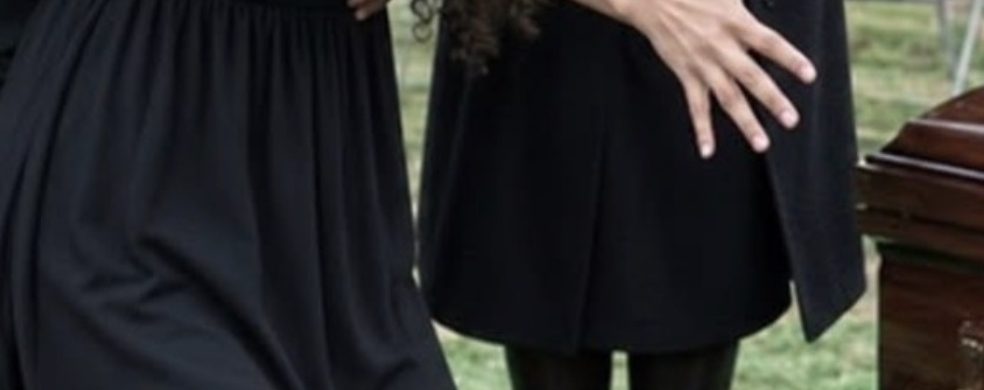
During the burial, rain gathered along the edges of Maya’s tiny white coffin, and I remember thinking absurdly that she hated getting wet, while Leo’s blue casket looked impossibly small beside Julian’s, and Claire gripped my fingers so tightly that neither of us noticed until afterward that my wedding ring had cut my skin.
That night, I returned to a house that still expected four people, with Julian’s coffee mug beside the sink, Maya’s glittery backpack hanging near the stairs, Leo’s sneakers kicked sideways beneath the bench, and three toothbrushes waiting in the bathroom as if death had made some clerical mistake that would soon be corrected.
Three days later, my mother sent a text saying, “Hope you’re managing, Eleanor felt hurt that you didn’t call her on her birthday,” and I stared at those words until the letters blurred, because somehow my sister’s disappointment had survived intact while my entire life had been reduced to ashes, paperwork, and graves.
I did not respond, and when my father later sent a message saying family should not punish family during emotional moments, I deleted the notification without opening the conversation, because something inside me had finally become still, not healed and not numb, but finished with asking people to love me.
Don’t Miss The Rest! Press Next Button Below To Continue Reading.
For the next six months, I stopped answering them, although there were surprisingly few calls to ignore, because after several irritated attempts my parents apparently decided that grief was another one of my inconvenient moods, and the family group chat quickly returned to restaurant photos, vacation plans, recipes, and updates about Eleanor’s engagement.
While they celebrated, I spent my mornings signing death certificates, answering insurance questions, meeting attorneys, closing accounts, canceling subscriptions, and discovering how many companies require a widow to repeatedly explain that the people attached to an account are not simply unavailable but permanently dead before anyone will stop charging them.
The cruelest moments were never the dramatic ones, because sometimes I would open the refrigerator and see the strawberry yogurt Leo liked, or find one of Maya’s hair ties under the sofa, and suddenly I would be sitting on the kitchen floor unable to breathe while afternoon sunlight quietly moved across the tiles.
Claire and Thomas never told me to get stronger, never suggested that Julian would want me to smile, and never asked when I planned to move forward, because they understood that grief was not a staircase leading upward but an ocean whose tides could knock you down again after weeks of standing.
Every Sunday, Thomas came over to repair something that did not actually need repairing, while Claire brought enough food to feed six people and pretended not to notice when I barely touched it, and gradually I realized they were keeping me alive without ever making me feel like a burden they deserved gratitude for carrying.
Aunt Ruth called every Wednesday evening, usually telling me ordinary stories about her garden or her neighbors before asking whether I had eaten dinner, and it was through those quiet conversations that I began understanding an uncomfortable truth, which was that blood relationships could explain history without automatically earning loyalty.
The investigation eventually confirmed that the truck driver had exceeded legal driving hours, his employer had ignored repeated fatigue complaints, and electronic records showed pressure from dispatchers to complete an impossible schedule, turning what initially looked like one exhausted man’s mistake into a chain of corporate decisions with three dead people at the end.
When the trucking company offered an early settlement, Julian’s father warned me not to let guilt make decisions for me, because I kept saying that accepting money felt disgusting, yet my attorney, Daniel Cho, reminded me gently that compensation was not a price placed on Julian, Maya, or Leo.
Daniel told me that no number could measure their lives, but money could force institutions to acknowledge consequences, fund safety changes, protect my future, and perhaps keep another family from standing where I had stood, and for the first time the settlement stopped feeling like blood money and began looking like responsibility.
We spent months negotiating, taking depositions, reviewing records, and listening to executives describe safety failures with language so sanitized that rage became almost useful, because whenever I wanted to disappear beneath my blankets, I remembered an email instructing the driver to keep moving despite reporting exhaustion and forced myself back into the conference room.
The final agreement reached eighteen point seven million dollars before legal fees and taxes, an amount so large that seeing it typed on paper made me physically ill, because everyone else would see wealth while I could only calculate how many birthday mornings, school pickups, bedtime stories, and anniversaries it could never purchase.
Before the settlement became public, I met Claire, Thomas, Aunt Ruth, and Daniel in Julian’s favorite diner, where I placed a folder on the table and explained that I wanted most of the money transferred into a foundation dedicated to child passenger safety, fatigued-driving prevention, and emergency support for families after catastrophic crashes.
I named it the Maya and Leo Safe Roads Foundation, but Julian’s name appeared beneath theirs with a simple line describing him as the father who loved bringing them home, because the last thing he had tried to do that morning was protect our children from a danger he could not possibly control.
Don’t Miss The Rest! Press Next Button Below To Continue Reading.
Claire cried when she saw the paperwork, Thomas walked outside for ten minutes before returning with red eyes, and Aunt Ruth squeezed my wrist beneath the table, while Daniel explained that the foundation structure would prevent relatives, opportunists, or even future versions of myself from casually treating the settlement like a personal jackpot.
I retained enough money to pay off our house, secure my retirement, cover therapy, and live without financial fear, but the majority entered irrevocable charitable trusts under independent oversight, meaning that once the documents were signed, nobody could pressure me into giving those millions away even if I later weakened.
On a cold Tuesday morning in January, a Richmond newspaper published the headline announcing both the eighteen point seven million dollar settlement and the new foundation, and I was drinking coffee at the kitchen table when my phone began vibrating so violently that it moved slowly across the wooden surface.
My mother called first, then my father, then Eleanor, followed by two cousins who had not spoken to me since before the funeral, an uncle who had once forgotten my wedding anniversary party while attending Eleanor’s housewarming, and three relatives whose numbers I had never bothered saving.
By noon, the family group chat that had ignored my grief for six months suddenly contained paragraphs about healing, forgiveness, family unity, and how proud everyone was of my strength, while Eleanor posted that she had always known something meaningful would come from my tragedy, a sentence that made me laugh for the first time in weeks.
The laugh surprised me because it did not sound happy, yet it felt cleaner than crying, and I realized there was something almost impressive about people who could ignore three graves until a dollar sign appeared beside my name, then immediately discover vocabulary involving unconditional love, togetherness, and concern for my emotional wellbeing.
At six thirty that evening, someone began pounding on my front door hard enough to shake the framed photographs in the hallway, and when I checked the security camera, I saw my father standing on the porch with my mother behind him and Eleanor beside her fiancé, Preston.
I considered pretending I was not home, but then my father struck the door again and shouted my childhood nickname as though affection could be resurrected by volume, so I opened the door while leaving the chain attached and asked what emergency had suddenly made visiting me worth the drive.
My mother immediately began crying, although I noticed there were no tears yet, and she said they had been terrified by the newspaper article because eighteen million dollars was an enormous responsibility for someone who had recently experienced trauma, while my father nodded gravely beside her like a financial adviser making a professional assessment.
Eleanor stepped forward with the expression she used whenever asking for something while pretending she was offering me a favor, then said they were worried strangers would exploit me, especially lawyers and charities, and suggested that family should help decide how Julian and the children’s money was protected.
I stared at her through the narrow opening and asked whether she meant the family that had missed their funeral for her birthday dinner, and for several seconds nobody answered, until my mother finally whispered that bringing up old mistakes would not help anyone heal.
My father became impatient and said the birthday situation had been complicated, because guests had traveled, deposits were nonrefundable, and Eleanor had already suffered through a difficult year, then he added that comparing one terrible decision to decades of parenthood was unfair, which told me he had rehearsed the argument before arriving.
I asked him whether he remembered the exact words he had used when I begged him to come, and his face tightened because he remembered perfectly, so I repeated them anyway, slowly enough for everyone on the porch to hear, “Today is your sister’s birthday, Sienna, we can’t come.”
Don’t Miss The Rest! Press Next Button Below To Continue Reading.
Preston looked toward Eleanor with visible confusion, because apparently the version he had heard involved my parents being unable to reach Virginia before the burial, and when Eleanor quickly told him there had been transportation problems too, I understood that my family had already rewritten history for people whose opinions mattered.
My father demanded that I unlock the chain so we could discuss private family matters properly, but I told him anything important could be said from the porch, and that was when concern finally disappeared from his face and the real reason for their visit stepped forward without disguise.
His consulting company had accumulated debt after losing two major clients, he explained, while my parents’ home carried a second mortgage, Eleanor’s wedding had grown more expensive than expected, and several relatives had financial pressures that could supposedly be solved easily without affecting my security because eighteen million dollars was more than one person needed.
For several seconds, I genuinely believed grief had damaged my hearing, because my father was standing outside the home where his dead grandchildren’s toys still occupied drawers and asking me to use money from their deaths to rescue his business and finance the birthday girl’s wedding.
Eleanor interrupted before I could answer and said she was not asking for millions, only enough to cover the venue, catering, photography, and honeymoon so our parents would not need to borrow more money, then added that Maya would have loved being a flower girl, as though invoking my daughter made the request tender.
The sound that left me was not quite a laugh and not quite a sob, and Preston stepped away from Eleanor when he saw my face, while my mother told everyone to calm down because money should never come between sisters, a remarkable statement considering money was the only reason my sister stood there.
I told them most of the settlement was already gone, and their expressions changed so quickly that even six months of grief could not prevent me from noticing, because my mother stopped crying, my father lowered his voice, and Eleanor asked what I meant by gone before asking whether I had been scammed.
I explained that the majority had been placed permanently into the Maya and Leo Safe Roads Foundation, under independent trustees and legally restricted charitable purposes, and my father stared at me as if I had announced that I had burned eighteen million dollars in the backyard simply to inconvenience him.
Don’t Miss The Rest! Press Next Button Below To Continue Reading.
He called the decision irresponsible, my mother said grief had impaired my judgment, and Eleanor actually asked whether the paperwork could be reversed, but I answered that the entire purpose of structuring it that way was ensuring nobody, including me, could raid the money because a relative suddenly wanted a larger wedding.
Preston lowered his eyes, Eleanor flushed bright red, and my father slammed his palm against the doorframe before telling me Julian would never have wanted me to abandon my own family, which finally made me remove the chain, step onto the porch, and close the door behind me.
I stood inches from the man who had taught me as a child that family comes first and asked him where that principle had been when Julian lay in a coffin, where it had been beside Maya’s grave, and where it had been while Leo was buried holding the stuffed dinosaur he slept with every night.
My mother started saying my name, but I continued because six months of silence had accumulated behind my teeth, telling them Julian’s parents had held me upright, Aunt Ruth had driven six hours, neighbors had filled my refrigerator, strangers had attended the funeral, while my own parents had ordered birthday dessert.
Eleanor cried that I was punishing everyone forever for one mistake, and I looked at my sister, remembering every childhood recital my parents had left early because Eleanor needed something, every graduation photograph arranged around her schedule, and every family disagreement in which my feelings became selfish whenever they inconvenienced hers.
I told her the funeral was not the beginning of the problem, only the moment I stopped pretending the problem was normal, and her face changed because people who benefit from a family pattern often experience another person finally naming it as an act of cruelty rather than an act of clarity.
Preston quietly asked Eleanor whether she had truly celebrated throughout the weekend after learning that Maya and Leo were dead, and when she snapped that cancelling would not have brought them back, he stared at her for several seconds before walking toward their car without saying another word.
My father blamed me immediately, shouting that I was destroying Eleanor’s relationship because I wanted everyone miserable, but I told him I had merely described what happened, and if the truth damaged something, perhaps the structure had already been rotten before I opened my mouth.
They finally left after my father promised that the discussion was not finished, and when their headlights disappeared, my knees buckled so suddenly that I sat on the porch steps in freezing air, shaking not from fear but from the terrifying relief of discovering that saying no had not killed me.
The next morning, my inbox contained a four-page email from my mother describing everything my parents had sacrificed while raising me, including piano lessons I had quit at fourteen and braces they had paid for when I was twelve, as though childhood expenses were loans that matured when a daughter received wrongful-death compensation.
My father sent a spreadsheet instead, which was somehow more insulting, calculating proposed distributions to relatives and suggesting that two million dollars could stabilize his company, five hundred thousand could support Eleanor’s wedding and home purchase, and smaller gifts could create what he called goodwill across the extended family.
I forwarded both messages to Daniel, who called me thirty seconds later and spent the first minute in silence before finally asking whether my father had seriously created a family settlement distribution model, and when I confirmed it, my normally restrained attorney laughed so hard he had to apologize twice.
Daniel told me not to respond emotionally because the documents were useful evidence of motive if my family escalated, then advised me to preserve every voicemail, email, text, and security recording, which felt unnecessarily dramatic until a certified letter arrived four days later from an attorney representing my parents.
They were not suing for settlement money directly, because even their lawyer apparently understood how absurd that would look, but the letter questioned whether I had possessed sufficient mental capacity when establishing the foundation and suggested my parents were considering protective legal action because grief had allegedly left me vulnerable to manipulation.
Reading the phrase “protective legal action” made my hands shake harder than the demand for money, because suddenly I understood what my father was willing to do: if I would not voluntarily become the daughter he could control, he would try to convince a court that I was too damaged to control myself.
Daniel’s voice became cold when I called him, and within forty-eight hours he had assembled my therapists’ records, financial evaluations, foundation trustees, estate documents, settlement negotiations, and months of emails demonstrating that I had designed the charitable plan carefully long before any newspaper announced the amount.
Claire wanted to confront my parents herself, Thomas wanted to pay for additional attorneys, and Aunt Ruth used several words I had never heard from a seventy-year-old woman, but I asked everyone to remain quiet because for once I wanted my parents’ own choices to carry the full weight of their consequences.
Their petition arrived two weeks later, wrapped in respectful legal language claiming concern about my isolation from family, excessive charitable giving, emotional instability, and susceptibility to outside influence, while carefully omitting that the relatives supposedly worried about my isolation had ignored me throughout the six months following three funerals.
Daniel filed our response with copies of my mother’s birthday complaint, my father’s proposed distribution spreadsheet, the porch recording, and timestamps from family social-media posts showing them raising champagne glasses at Eleanor’s dinner during the same hours Julian’s parents were preparing photographs for three memorial displays.
The hearing attracted local attention because my settlement had already generated news coverage, and although Daniel urged me to use a private entrance, I walked through the courthouse doors beside Claire and Thomas, carrying Maya’s purple bracelet around my wrist and Julian’s wedding ring on a chain beneath my blouse.
My parents sat across the courtroom wearing expressions of solemn concern, while Eleanor avoided looking at me entirely, and for one terrible moment I almost became eight years old again, preparing to apologize simply because everyone else seemed angry, until Claire squeezed my hand beneath the table.
My father testified that he loved both daughters equally, that grief had made me hostile, and that I had become influenced by Julian’s parents and opportunistic attorneys, yet under Daniel’s questioning he admitted he had not visited me once during the six months before the settlement became public.
When Daniel asked how many therapy appointments my father had attended with me, he answered none, when asked how often he had brought food or helped with paperwork, he answered none, and when asked the date he first became concerned about my financial judgment, he reluctantly admitted it was the morning the article appeared.
Then Daniel displayed the spreadsheet, and the courtroom became so quiet that I could hear my mother breathing, while my father attempted to explain that the proposed two-million-dollar business transfer represented merely an example of responsible family planning rather than a request for personal financial benefit.
Don’t Miss The Rest! Press Next Button Below To Continue Reading.
The judge looked over her glasses and asked whether responsible family planning normally involved assigning five hundred thousand dollars of wrongful-death proceeds to a wedding, and even Eleanor’s attorney lowered his head while my father began explaining cultural expectations nobody in our family had ever previously mentioned.
My mother’s testimony lasted less time because Daniel read her message saying Eleanor felt hurt that I had missed the birthday call, then asked whether she had sent any message that week asking how I survived watching my husband and children buried, and she quietly admitted she had not.
Eleanor was the last family member called, and when Daniel asked whether she had understood why I did not telephone her on her birthday, she said everyone had been grieving differently, but when he asked whether she had considered cancelling the dinner, she answered that she had not wanted the tragedy to ruin another important family milestone.
I expected those words to destroy me, yet instead they released something I had carried since childhood, because hearing Eleanor state the family rule aloud made it undeniable: my pain was acceptable as long as it remained quiet enough not to interfere with whatever everyone else had decided mattered more.
The judge dismissed the petition completely, finding no credible evidence that I lacked capacity and substantial evidence that my financial decisions had been deliberate, professionally advised, and consistent for months, then warned my parents’ attorney that any renewed filing without genuinely new evidence could invite sanctions.
Outside the courthouse, reporters surrounded us, asking whether I intended to sue my parents or expose more family details, but I told them I had no interest in revenge, because I had already spent enough of my life arranging my emotions around people who demanded center stage.
I said the only story worth reporting was why three people had died because a commercial driver was pressured beyond safe limits, and why the foundation existed to help prevent another child from becoming a photograph held by a mother at a graveside, then I walked away without mentioning my parents again.
That evening, however, a short courthouse clip spread online anyway, especially the portion where the judge questioned the wedding request, and within days Eleanor began posting long statements insisting strangers had misunderstood the situation, each explanation attracting more attention than silence would ever have created.
Preston ended their engagement three weeks later, not because I asked him to and not because he suddenly became my ally, but because, according to a brief message he sent Aunt Ruth, the porch conversation had shown him a version of Eleanor’s values he could no longer pretend he had not seen.
My father’s business still failed that spring, because two million imaginary dollars cannot repair years of bad decisions, and although several relatives privately blamed me for refusing to rescue him, none volunteered their homes, retirement accounts, or savings once helping him required spending their own money.
My mother continued sending messages for months, alternating between guilt, anger, nostalgia, and religious quotations about forgiveness, until I finally wrote one reply explaining that forgiveness and access were not the same thing, and that I could release my hatred without reopening the door that had protected me from repeated harm.
I told her I hoped she and Dad eventually understood what they had lost, but I would no longer attend gatherings where Maya and Leo’s deaths were treated as uncomfortable history while Eleanor’s feelings controlled the room, and after sending it, I blocked every number except Aunt Ruth’s.
The silence afterward was different from the silence following the funeral, because the first had felt like abandonment while this one felt chosen, and I began recognizing that peace sometimes arrives without reconciliation, especially when reconciliation would require the injured person to pretend that the wound was smaller than it actually was.
Meanwhile, the Maya and Leo Safe Roads Foundation hired researchers, partnered with transportation-safety advocates, provided emergency grants to families facing funeral expenses after road deaths, and funded rest programs for commercial drivers who feared retaliation from employers when reporting fatigue or unsafe schedules.
Our first major campaign installed fatigue-awareness signs and expanded overnight rest resources along several trucking routes in Virginia, and although a roadside sign could never become my children, seeing their names attached to something designed to send another parent safely home gave grief somewhere useful to travel.
Claire began volunteering twice a week, usually correcting everyone who called her Mrs. Vance and insisting that anyone discussing Maya should know she once cut her own bangs before school picture day, while Thomas quietly built shelves for the foundation office and pretended the work did not make him emotional.
On what would have been Leo’s fifth birthday, we delivered five hundred emergency comfort kits to children involved in serious traffic accidents, each containing a blanket, stuffed dinosaur, coloring book, headphones, and a small card reminding frightened children that somebody was waiting for them to feel safe again.
On Maya’s eighth birthday, we launched a scholarship for students designing road-safety technology, and I chose the first recipient after reading her proposal for an affordable fatigue-detection system, crying halfway through because Maya had loved building ridiculous inventions from cardboard boxes and tape.
Julian’s birthday was harder, because there was no program large enough to contain missing the man who danced badly while cooking breakfast and stole blankets every night, so I spent the morning alone at our kitchen table drinking coffee from his old mug before meeting Claire and Thomas at the cemetery.
I still visited all three graves every Sunday, although I gradually stopped apologizing for surviving, because therapy taught me that survival had not been a betrayal, and Claire once told me Julian would be furious if death succeeded in convincing me that loving him required destroying the life he had protected.
Don’t Miss The Rest! Press Next Button Below To Continue Reading.
Almost a year after the crash, a letter arrived at the foundation from a truck driver named Marcus, who wrote that he had been pressured to continue after twenty hours awake but remembered our fatigue campaign, refused the dispatch, and pulled into one of the rest facilities our funding had expanded.
Marcus wrote that another vehicle crashed along the same route that night, and although nobody could know what would have happened if he had continued driving, his wife and two daughters thanked the foundation for giving him enough confidence to choose safety over a paycheck.
I read that letter three times before taking it to the cemetery, where winter grass had begun turning green again, and I sat between Maya and Leo’s graves with Julian beside them, reading every word aloud even though I knew the dead did not require voices to understand love.
When I finished, I told them that a father had gone home safely to two daughters because their names had made him stop, and for several minutes I cried harder than I had in months, not because the grief had returned, but because grief had finally touched something beyond loss.
Aunt Ruth joined me later carrying three ridiculous balloons, one purple for Maya, one shaped like a dinosaur for Leo, and one reading “World’s Okayest Dad” for Julian, which made me laugh so unexpectedly that a cemetery groundskeeper glanced over as if laughter near graves violated some unspoken rule.
That afternoon, we met Claire and Thomas at the diner where I had first announced the foundation, and when the waitress placed four menus on the table, Claire automatically reached for a fifth before stopping, a tiny movement that reminded me healing never meant forgetting who should have occupied the empty chair.
My parents never apologized without attaching an explanation, and Eleanor never admitted that her birthday could have been celebrated another day, so there was no dramatic reunion, no Christmas embrace, and no miraculous scene where everyone suddenly became the family I had needed while standing beside three caskets.
For a long time, I believed that absence of reconciliation meant the story remained unfinished, because movies teach us that every wound needs an apology and every broken family deserves one final conversation, but real endings can simply be decisions repeated until they become the shape of a new life.
I sold very little from the house, keeping Julian’s mug, Maya’s jacket, Leo’s crooked sneakers, and dozens of ordinary objects that would mean nothing at an auction, yet I eventually packed away the toothbrushes and donated clothes without feeling that every cardboard box represented a second burial.
One spring morning, I painted Leo’s old room and turned it into a small reading space, leaving his dinosaur drawings framed on one wall, while Maya’s room became my foundation workspace whenever I stayed home, with her glitter-covered desk still standing beneath stacks of transportation reports and grant applications.
People sometimes asked whether eighteen point seven million dollars had changed my life, and technically it had, but never in the way they imagined, because money removed bills and created opportunities while grief remained stubbornly unimpressed by bank balances, legal victories, newspaper headlines, or charitable awards.
Don’t Miss The Rest! Press Next Button Below To Continue Reading.
I still miss the family I was born into sometimes, although what I truly miss may be the family I spent years imagining they could become, and I have finally stopped confusing that imagined version with the people who chose a birthday dinner when I needed them beside three graves.
The people who became my real family never needed a headline, a settlement, or a court order to find me, because they came when my house was dark, when I could not eat, when conversation hurt, when there was nothing to gain, and when showing up required giving instead of taking.
That is why the most important thing I inherited from the worst day of my life was never eighteen point seven million dollars, because money was only the number newspapers could print, while the real inheritance was the certainty that I would never again beg anyone to prove that I mattered.
Julian, Maya, and Leo never came home from Interstate 95, and there will always be a part of me standing beside that impossible road waiting for them, but the rest of me kept walking, carrying their names into places where their lives could protect people they would never meet.
My parents thought the headline meant I had suddenly become rich enough to save everyone, but they were wrong, because the most valuable thing I gained was something they could never borrow, demand, manipulate, sue for, or spend: the courage to finally save myself.