
Gentle, Playful Challenge for Your Observation Skills
Oh, my dear friend, there is something so delightful about a good visual puzzle. It invites us to slow down, look closely, and notice the little details that often escape our attention. One such puzzle that has been making the rounds is the “Hidden Pig” illustration—a charming scene with a cleverly concealed animal waiting to be discovered.
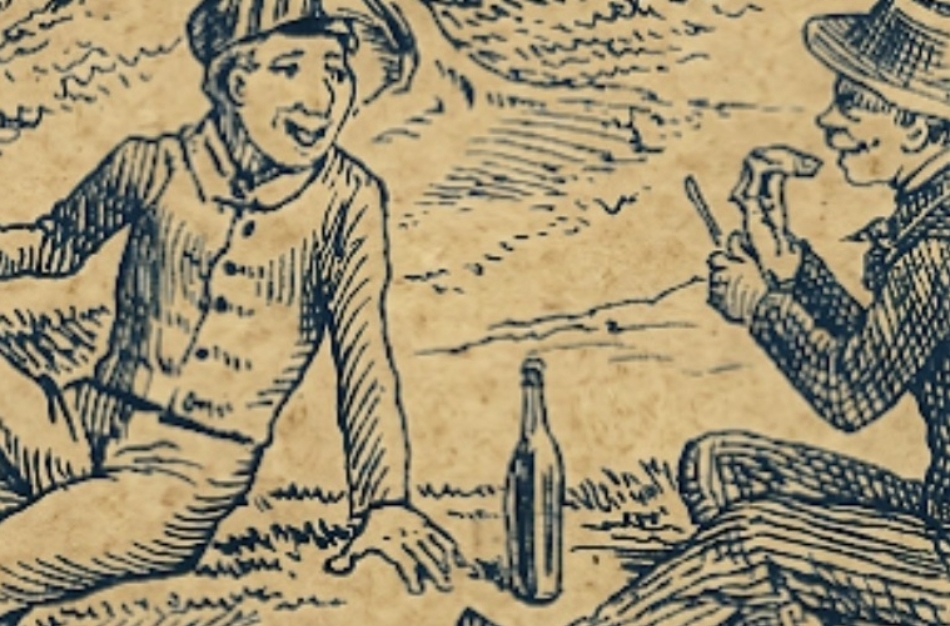
When you first look at this illustration, your attention naturally goes toward the most recognizable parts of the scene. The people, the picnic setting, and the large tree branches immediately give your brain a story to follow. Because those elements look familiar, it is easy to assume that they contain everything important in the picture.
That assumption is exactly what makes the puzzle interesting.
The hidden pig is integrated into the surrounding shapes, so your brain may initially interpret its outline as part of the scenery. Instead of seeing an animal, you may simply see branches, gaps, curves, and irregular shapes. Once you discover the hidden figure, however, the same details can suddenly look completely different.
Why Hidden Pictures Can Be So Tricky
Our brains are remarkably good at recognizing familiar objects. When we look at a picture, we don’t consciously analyze every individual line. Instead, our minds quickly organize visual information and try to identify the most meaningful shapes.
This is useful in everyday life because it allows us to understand complicated scenes quickly. However, it can also make optical puzzles more difficult.
When the brain has already decided that an area of the picture is simply a tree branch or part of the background, it may not immediately consider the possibility that those same lines form another object. That’s why you can sometimes stare directly at a hidden figure without realizing what you’re seeing. The problem isn’t necessarily that the object is too small. In many cases, it is the way the surrounding shapes are arranged that makes the figure difficult to recognize.
Have You Looked at the Whole Image?
If you’re still searching, try changing your approach. Instead of examining one tiny section for a long time, look at the entire illustration from a short distance. Allow your eyes to take in the overall composition rather than concentrating on individual details.
Then slowly scan across the image. Pay particular attention to unusual curves and shapes that don’t seem to belong naturally to the objects around them. A branch may have a shape that looks slightly different from the others. A space between two objects may have an interesting outline. A collection of several small shapes may begin to resemble part of an animal.
The goal is not to force yourself to see a pig everywhere. Instead, you’re looking for an arrangement of shapes that makes sense when viewed from another perspective.
Don’t Ignore the Empty Spaces
One of the most useful ideas when solving visual puzzles is to pay attention to empty space.
Most people naturally focus on the objects that are actually drawn. We notice the people, trees, and other visible elements while treating the spaces between them as unimportant. In an optical puzzle, that can be a mistake.
Sometimes the outline of a hidden object is created partly by the objects themselves and partly by the empty areas surrounding them. The shape you’re searching for may become visible only when you stop concentrating on the individual objects.
Look between branches. Examine the spaces around the people. Notice unusual gaps and outlines. You may find that an apparently meaningless space starts to resemble something familiar.
Try Changing Your Viewing Distance
Another useful trick is to change how far away you are from the image. Look at it closely for a few seconds and then move farther away. When you do this, individual details become less dominant and the overall shape of the illustration becomes easier to see.
Sometimes a hidden figure is difficult to recognize when you’re looking at every small detail separately. When you step back, several shapes can visually combine into one larger form. You can also slightly change the angle at which you’re looking at the picture. Even a small adjustment can sometimes make an unusual shape easier to recognize.
What Makes the Pig Difficult to Recognize?
The hidden animal doesn’t necessarily look like a conventional drawing of a pig. That’s an important part of the challenge.
When people search for a hidden pig, they often expect to see a complete animal with a clearly visible body, ears, nose, and legs. But optical puzzles often work differently. The artist can use existing elements of the illustration to suggest an object without drawing it in a straightforward way.
A curved branch might resemble part of the animal’s body. Another shape may suggest the head. The surrounding negative space can help complete the impression. Your brain has to connect those separate visual clues before the hidden image becomes clear.
A Gentle Reminder
The joy of a puzzle like this lies not just in finding the object, but in the process of looking. It’s a reminder that slowing down and paying attention can reveal hidden beauty and surprises in everyday life.