
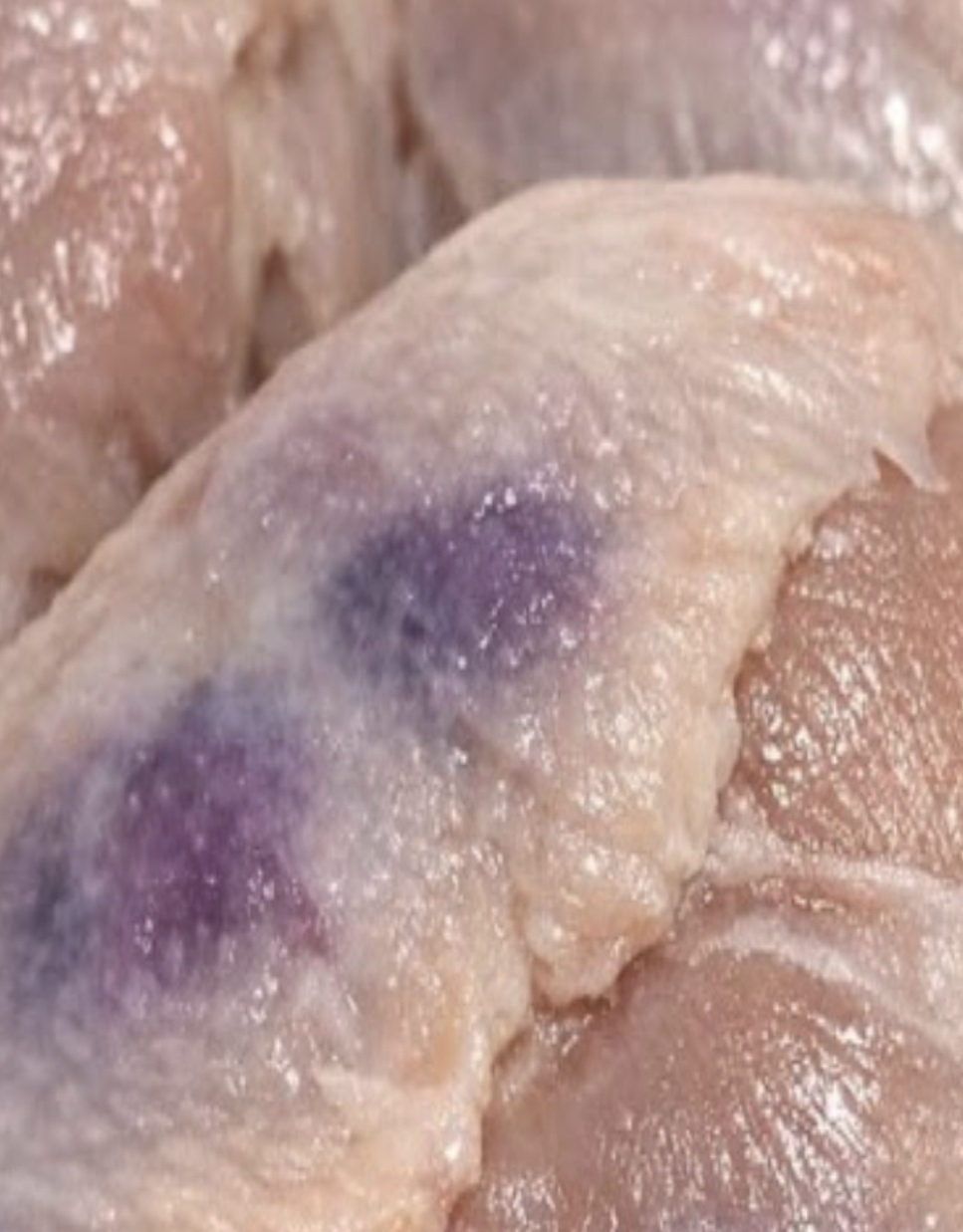
You pull your chicken breasts out of the fridge, ready to start dinner, and then you notice it—dark purple blotches under the skin. Instantly, doubt sets in. Is this normal? Is the chicken spoiled? Should you risk cooking it, or is it safer to toss it out?
If this situation looks familiar, you’re not alone. Purple or dark patches on raw chicken are a surprisingly common sight, and they often cause unnecessary worry. Let’s break down what those blotches really mean, why they happen, and when chicken is actually unsafe to eat.
Why Do Chicken Breasts Have Purple or Dark Spots?
The purple discoloration seen under the skin of chicken breasts is usually caused by bruising or trapped blood. During processing, chickens can experience minor trauma, and small blood vessels may rupture. When the meat is frozen and later thawed, this pooled blood becomes more visible, showing up as purple, blue, or dark reddish patches.
This is not a sign of spoilage by itself.
Common causes include:
- Bruising during handling or transport
- Blood vessels breaking near the surface
- Freezing and thawing making discoloration more noticeable
These spots are cosmetic, not bacterial.
Is Chicken with Purple Blotches Safe to Cook?
In most cases, yes—chicken with purple blotches is safe to cook and eat, as long as there are no other warning signs of spoilage.
The key is to rely on smell, texture, and overall appearance, not color alone.
The chicken is safe if:
- It smells neutral or mildly meaty
- The texture is firm, not slimy
- There’s no green, gray, or fuzzy growth
- The packaging date is still valid
Throw it out if:
Is Chicken with Purple Blotches Safe to Cook?
In most cases, yes—chicken with purple blotches is safe to cook and eat, as long as there are no other warning signs of spoilage.
The key is to rely on smell, texture, and overall appearance, not color alone.
The chicken is safe if:
- It smells neutral or mildly meaty
- The texture is firm, not slimy
- There’s no green, gray, or fuzzy growth
- The packaging date is still valid
Throw it out if:
- It smells sour, rotten, or sulfur-like
- The surface feels sticky or slimy
- The color is gray-green or yellow
- It was left thawed at unsafe temperatures
When in doubt, trust your senses—your nose is especially reliable.
Can You Remove the Purple Spots?
Yes. If the appearance bothers you, you can simply trim away the dark areas before cooking. This won’t affect safety or flavor. Once cooked, the meat usually looks completely normal.
Proper cooking to an internal temperature of 165°F (74°C) will kill any harmful bacteria present, regardless of discoloration.
Why Color Alone Isn’t a Food Safety Indicator
Many people assume fresh chicken must be uniformly pink, but that’s not always realistic. Chicken color can vary based on:
- Age of the bird
- Muscle use
- Oxygen exposure
- Freezing and thawing
Purple, red, or dark patches don’t automatically mean the chicken has gone bad. Spoilage is about bacteria growth, not bruising.
Final Verdict: Cook or Toss?
If your thawed chicken breasts look like the image—purple blotches under the skin but otherwise fresh—they are almost always safe to cook. As long as the smell and texture check out, there’s no reason to waste perfectly good food.
When handled properly and cooked thoroughly, this chicken is just as safe and nutritious as any other.
Quick Tip for Peace of Mind
If you’re ever unsure, cook a small piece first. Spoiled chicken will release an unmistakably bad smell once heated.